Intelligent Phone Activity - A Powerful Form of Engagement

Adam Payne • 29 April 2021

Does the Telephone Still Work?

Does the Telephone still work?

Yes! Absolutely! Used correctly the Telephone is a powerful engagement and prospecting tool.

I think a lot of people shy away from it quoting things like

  • I can’t reach anyone.
  • I won’t get past the gatekeeper.
  • the phone doesn’t work anymore, it’s all about digital.

The Telephone will deliver results if used properly, most of the above in my opinion is procrastination, not feeling comfortable with calling, even limiting beliefs on the process, all these are false assumptions and something you’ve got to push through. 

Being prepared helps massively, when we make the call, we know there are going to be three outcomes.

1. We get the prospect.
2. We get the Gatekeeper.
3. We get voicemail.

Each requires a different response and being prepared and comfortable with each is key. 

This is where scripts can help, I’m not a fan of scripts, you want to natural, energetic, passionate with your tone and language, scripts can hinder that, but they can help in the early stages making us feel comfortable, giving us a bit of a protection as we deal with the three outcomes above. Ultimately, we want to move away from them.

In leaving a Voicemail you don’t want to be thrown off guard and leave an awful message, people use voicemail as a screening process, so it needs to be slick, positive, succinct. If you leave a poorly recorded voicemail what are the chances the prospect will call you back?

When making the call, make it about them, not about you. Speak with energy, passion and believe in yourself, and be prepared, all as previously stated.

Existing Customers

With existing customers it’s a superb way of keeping engagement, Customer experience and satisfaction are differentiators, keeping in touch is priority!

There are also opportunities here as well, calling to ask for feedback on the product and service your customers have bought, asking for referrals, calling back as you’ve taken their feedback and enhanced your product and service (they might well be interested in upgrading).

Keep Records

Always keep track of your conversations, outcomes, dates, times, and above all else ensure it goes into your CRM database (Customer Relationship Management). Make time, particularly if you’re out and about, to scroll through your call log on your mobile recording the times and conversations.

Benefits
  • Direct Conversation with People You Want to Meet
  • Powerful & Under Control
  • Relatively Low-Cost Approach in Reaching Your Audience
  • Builds Rapport & Creates a Personal Connection
  • Fastest Path to Cash

The Telephone is here to stay, so use this Powerful Engagement Tool.

If you need help with anything in Getting and Keeping Customers to Thrive and Grow then please do get in touch by 'clicking here'

LinkedIn Online Course

***GETTING AND KEEPING CUSTOMERS***


The life blood of any and every business - you'd have more sales, more profits, less stress, less worry - arguably everything would improve.


Hidden challenges that may be sabotaging your growth, I’ll help you get renewed, re-energised, and inspired to turn your business into a highly profitable, revenue-generating machine.. - Click Here

by New Way Growth • 14 October 2026
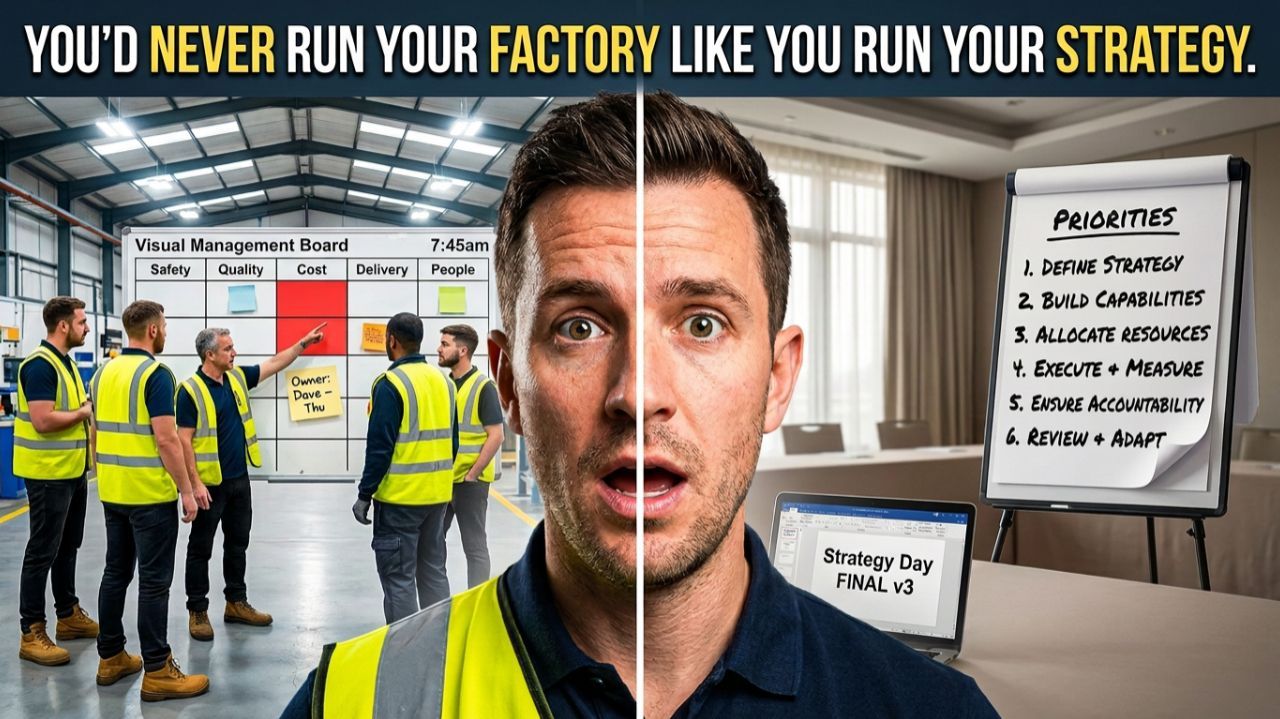
UK manufacturers run their shop floor on daily boards, fixed rhythms and root cause analysis, yet run strategy through an annual away day, so priorities quietly fade within weeks. This post explains why strategic drift starves margin work first, and how applying production disciplines stops a plan becoming a document.
by Adam Payne • 7 October 2026
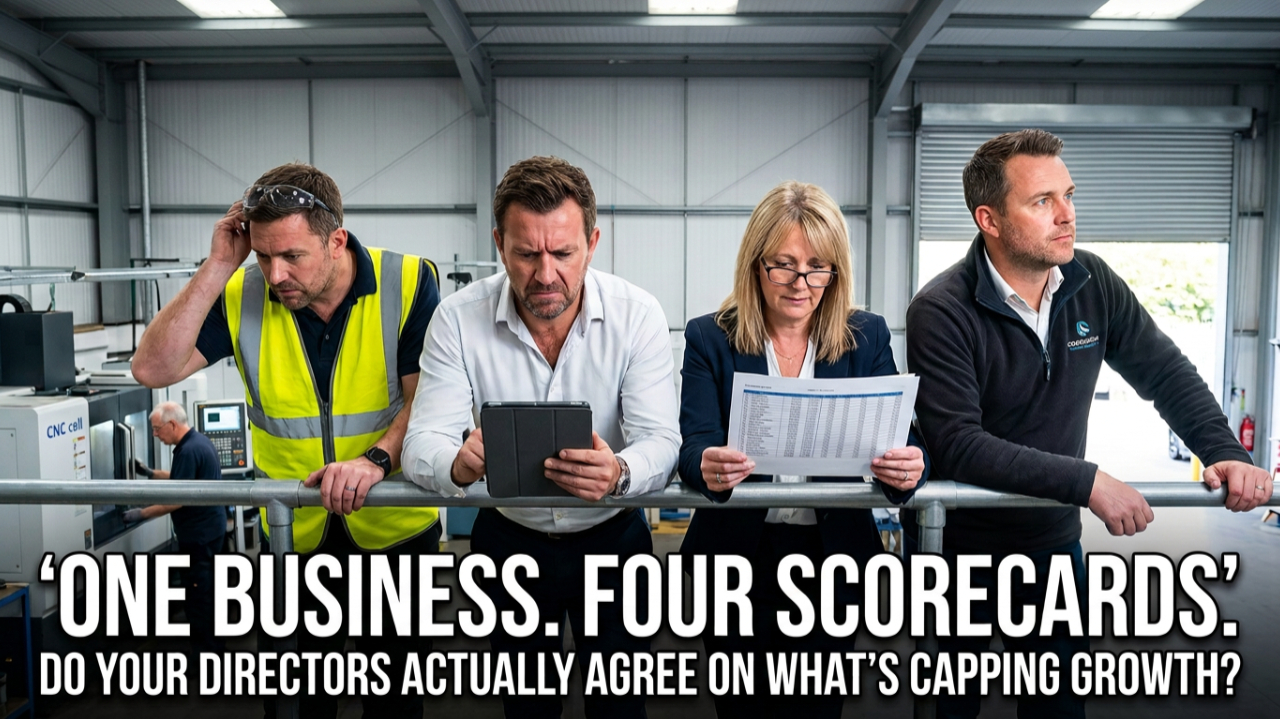
Why directors of UK mid sized manufacturers often disagree about what's capping growth without realising it, what that hidden misalignment costs in split budgets and stalled initiatives, and how the Four Answers Test reveals it in one 45 minute meeting using a scored alignment total and a confidence gap.
by New Way Growth • 30 September 2026
A quiet diagnostic exercise for MDs of UK medium sized manufacturers: list every decision you made last week, mark those that reached you through habit, history or a missing written rule, then note how long each one waited, to see how much critical knowledge runs through too few heads.
by Adam Payne • 25 September 2026
Follow one £186,000 UK manufacturing contract from quote to bank and see exactly where the margin goes: a discount agreed in the last five minutes, stale material prices, panels scrapped after a drawing revision, ten days of invoice drift, a bounced part number and five months funding someone else's business.
by Adam Payne • 17 September 2026
UK manufacturing growth numbers get committed in the boardroom, the bank, to a group MD or across the kitchen table, while the capacity, decision rights and reporting lines needed to deliver them are quietly assumed rather than built. A practical look at where that gap comes from and what closing it actually requires.
by Adam Payne • 9 September 2026
UK manufacturing firms stall at roughly £3m, £10m and £25m for structural reasons, not effort. This guide explains each growth ceiling, the warning signs (decisions queueing on the owner, revenue rising while margin flatlines, knowledge trapped in 3 or 4 heads), and the specific changes that break through each one.
by Adam Payne • 1 September 2026
How UK engineering, defence and confidential contract manufacturers build authority when NDAs, IP restrictions and export controls block the obvious approach.
by New Way Growth • 25 August 2026
A practical risk register for UK micro and medium manufacturers: ten marketing roadblocks, including capacity limits, late payment cash flow squeezes, key person dependency, platform changes and staff turnover, each paired with an early warning sign and a specific contingency to plan around before it derails growth.
by Adam Payne • 13 August 2026
For UK manufacturers, marketing stops and starts because of capacity, ownership and planning, not willpower. Here is a routine that survives busy months.
by Adam Payne • 5 August 2026
How UK manufacturers can turn "that's not my job" into lasting accountability using the PDCA cycle (Plan, Do, Check, Act) and a daily governance rhythm, explained with real shop floor examples.