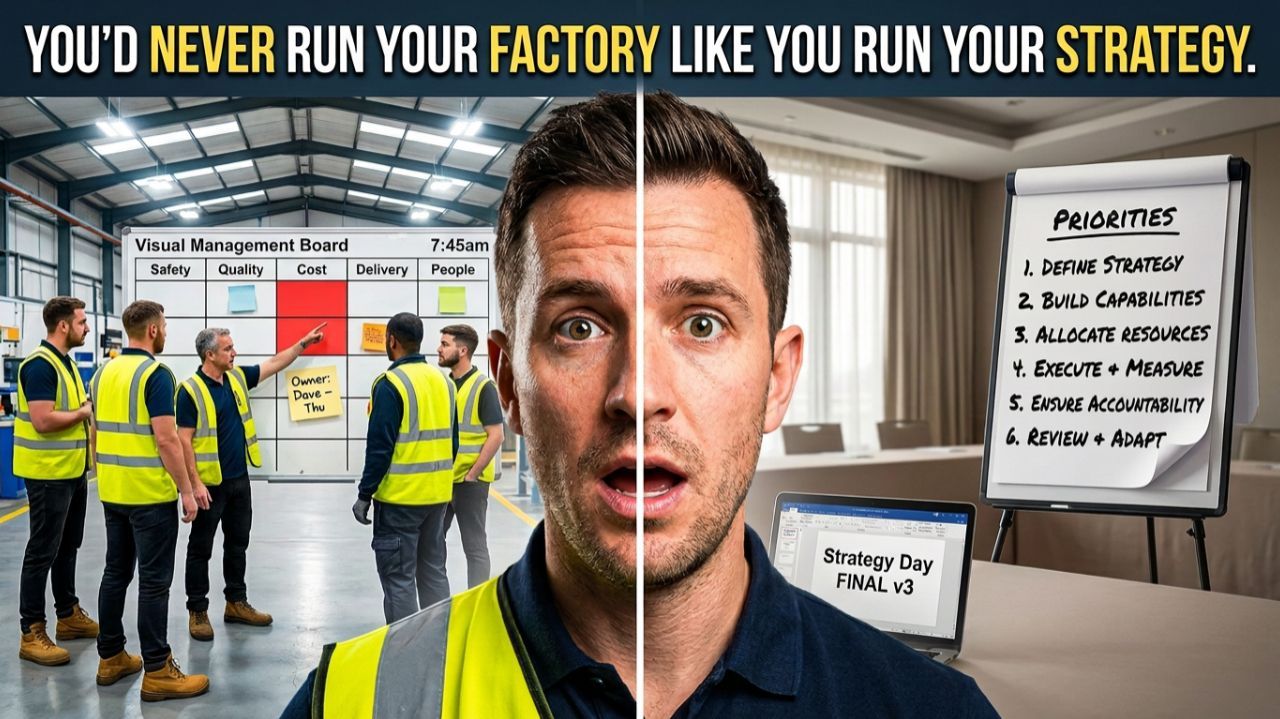
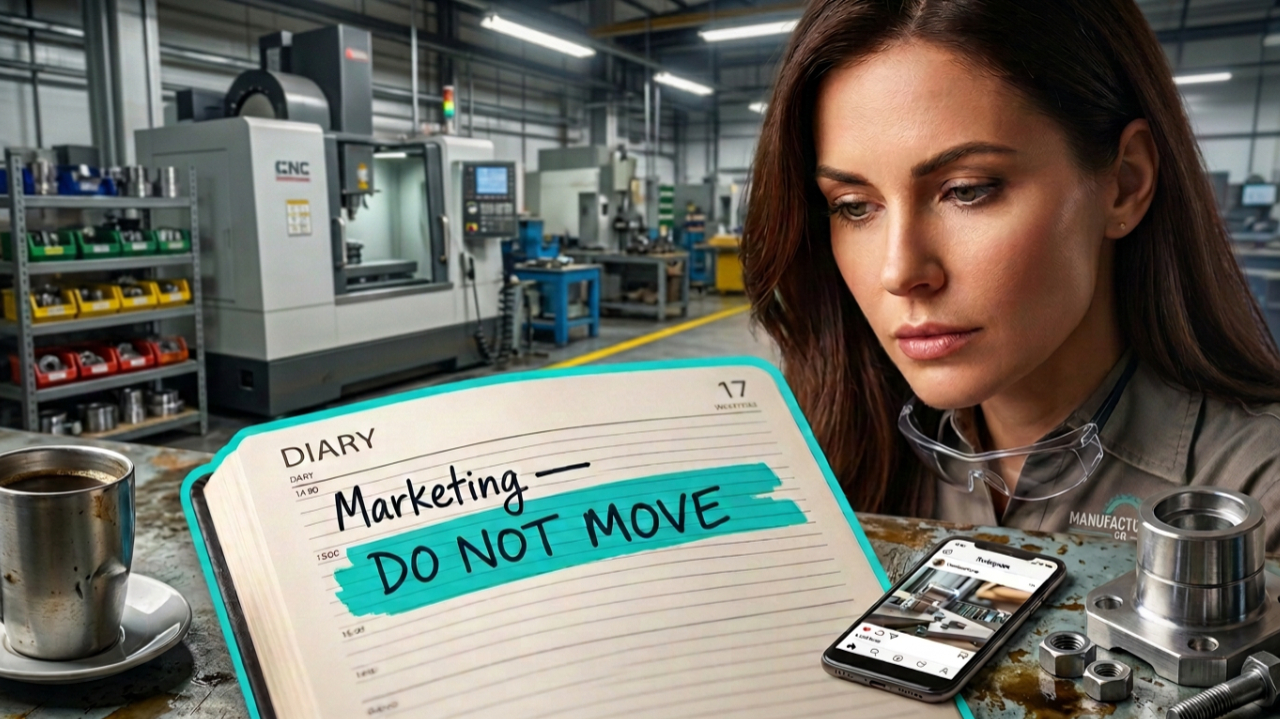
You've been in that room. The strategy day. Flip chart pens, a slightly too enthusiastic facilitator, maybe a hotel meeting room with average coffee and worse biscuits. By four o'clock you've got a shiny new plan, a set of priorities everyone nodded along to, and a genuine sense that this year will be different.
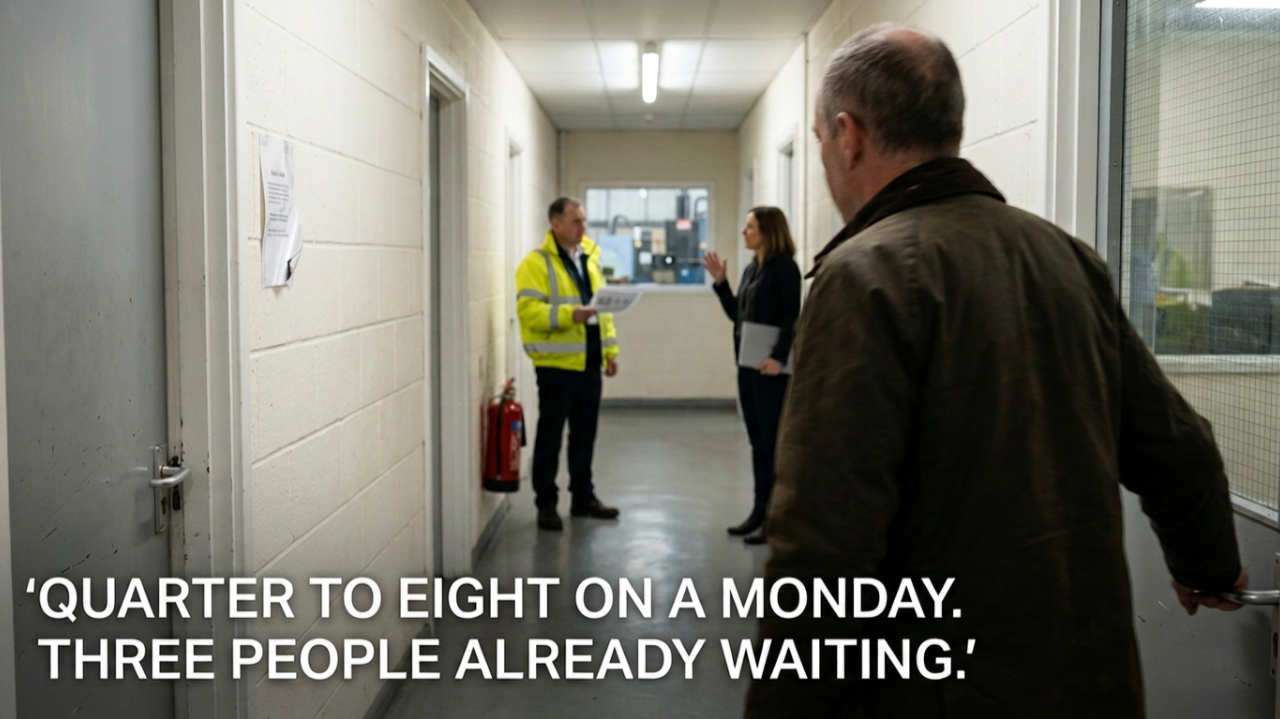
Then Monday comes. A machine goes down on line two. A key supplier misses a delivery. Someone's off sick and there's no cover. And the plan you spent a full day, and a decent chunk of budget building quietly slides into a drawer, or worse, onto a laminated poster by the coffee machine that nobody reads again after week one.
If that sounds familiar, you're not alone, and to be honest, you're probably not bad at this. You're just living out one of the most persistent numbers in business. Something like 90% of strategies fail, not because they're bad strategies, but because they never actually get done. Nobody quite agrees on the real figure. Some studies say 67%, some say 70%, Kaplan and Norton, the pair behind the Balanced Scorecard, put it at 90%. But ask yourself honestly how many of last year's strategic priorities you'd say were properly finished, not just started, actually embedded into how your business runs, and you'll probably land somewhere in that range too.
This one's for you if you run, manage or lead operations in a UK manufacturing business. We'll look at why execution breaks down specifically on a factory floor, because it's genuinely different to how it plays out in a services business and I don't think that gets talked about enough, and what you can actually do about it without hiring a small army of consultants.
The 90% figure, and why the exact number barely matters
Let's deal with the number first, because people love arguing about it.
The 90% stat usually gets traced back to Robert Kaplan and David Norton. Their research found that in a lot of organisations, fewer than 10% of employees said they actually understood the company's strategy. Only around 40% of organisations linked their budgets to it, and only 30% tied incentives to it. So, if barely anyone understands the plan, hardly anyone's actually paid to deliver it, and the money isn't necessarily following it either, is it really a surprise most of it doesn't happen?
Harvard Business Review has put the figure closer to 67%, describing it as well formulated strategies failing because of poor execution rather than poor thinking. McKinsey's research on transformation programmes lands around 70%, and here's the bit worth sitting with. They found the main cause wasn't technical at all. It was people. Not the machinery, not the software, not even the money. People.
We tend to assume a failed strategy means the strategy itself was flawed. Wrong market, bad timing, someone got the numbers wrong. Sometimes that's true. But far more often, the plan was perfectly sound. It just never survived contact with the actual business.
And manufacturing has its own particular version of this problem. You don't get the luxury of a strategy quietly failing in the background while everyone's distracted with something else. Your strategy has to compete, every single day, with a production schedule, a maintenance backlog, an order that needs to go out by Thursday and a customer on the phone asking where their delivery's got to. Strategy is important, but it's rarely urgent. Firefighting is both. Guess which one wins most days?
That's not a criticism of your team, by the way. It's just how attention works under pressure. The strategy document says "improve operational efficiency by 15% this year." The shift supervisor's actual job that morning is "get this order out on time." One of those has a deadline in the next four hours. The other has a deadline sometime, vaguely, this year.
So when people talk about strategies failing, what's usually happened is quieter than that. Nothing dramatic, no big crisis meeting where someone admits it isn't working. It just slowly stops being anyone's actual job, week by week, until the next strategy day rolls around and you do the whole thing again.
Why execution breaks down differently in a factory than in an office
Here's where manufacturing genuinely differs from a services business, and I don't think enough strategy advice accounts for it.
First, there's the translation problem. Your leadership team decides the business needs to be more customer focused, or needs to digitise the factory, or needs to expand into new product lines. Fine words. But what does "be more customer focused" actually mean for a machine operator on a Tuesday afternoon? What does it mean for the person on goods in? Somewhere between the boardroom and the shop floor, that sentence needs to turn into something specific enough to actually act on, and that translation step gets skipped more often than you'd think. Research from the World Economic Forum has made this point well, arguing that transformation in manufacturing tends to fail not because the technology is too complicated, but because the communication around the change gets neglected or handled badly.
Second, there's the shift problem. If your comms plan for a big change is an email and a town hall at ten in the morning, you've just told your second and third shift, and quite possibly your most experienced people, that this doesn't really apply to them. They find out third hand, from someone on shift changeover, days later, usually with some of the detail wrong by then. That's not really a communication plan. That's a rumour mill with extra steps.
Third, and this one's very current, there's the sheer weight of what's already competing for attention. Make UK's 2026 Executive Survey, produced with PwC, found that almost nine in ten manufacturers expect employment costs to keep rising this year, with energy, materials and logistics costs all trending upward too. When your margins are getting squeezed from every direction and you're also being asked to roll out a new strategic priority, something has to give. Usually it's the strategic priority, because the cost pressure simply doesn't wait its turn.
The same survey found that skills and workforce capability, cost of transformation, and legacy systems and processes were each cited by around four in ten manufacturers as genuine barriers holding them back. That's not a small number. That's basically two out of five UK manufacturers knowing exactly why their strategy isn't landing, and just not having fixed it yet.
I've sat in on enough of these rollout meetings to notice a pattern. Leadership gets frustrated that nothing's changing on the floor. The floor gets frustrated that leadership doesn't understand how things actually work there. Both are usually right, and both are usually talking about the same problem from opposite ends without quite realising it.
Nobody actually owns the numbers
This is the one I think gets overlooked the most, maybe because it's a bit uncomfortable to look at directly.
Go back to that Kaplan and Norton research for a second. Only 40% of organisations link their budgets to their strategy. Only 30% link pay or incentives to it. Think about what that actually means in practice. You've asked people to deliver something, but you haven't necessarily given them the money to do it, and you almost certainly haven't connected it to anything they're personally measured or rewarded on. So, it competes with everything that is measured and rewarded, and it loses.
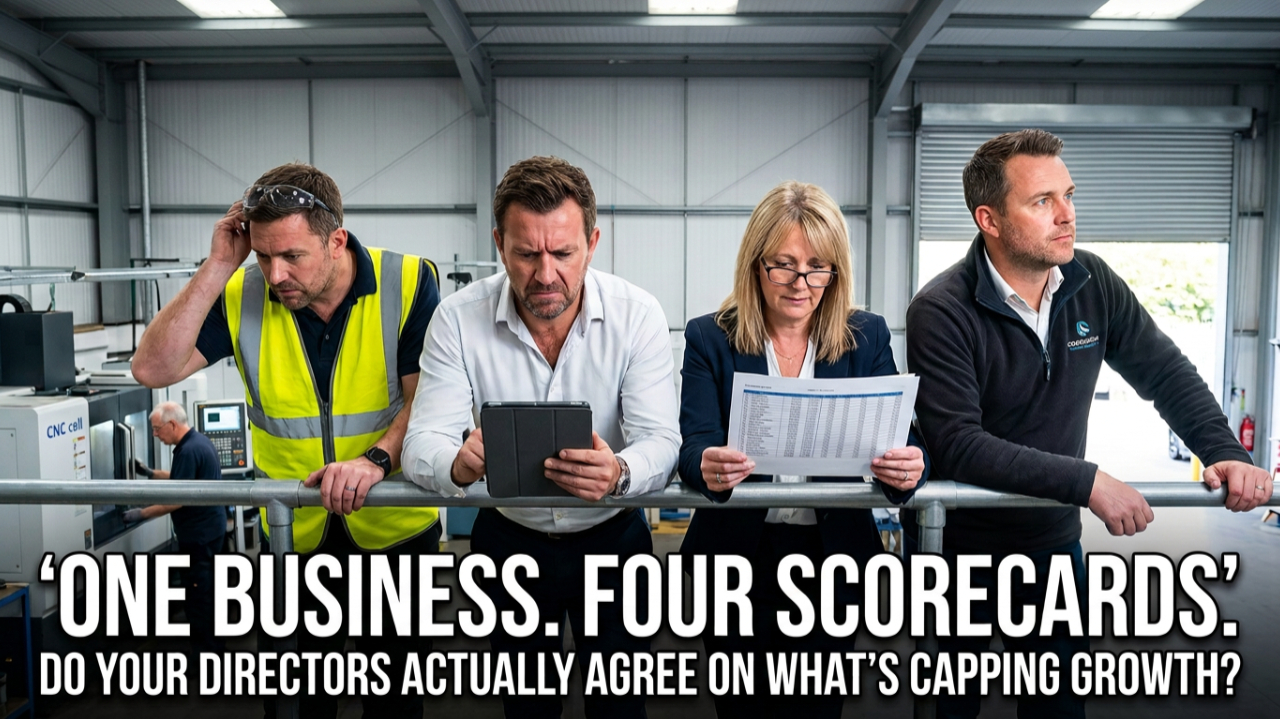
On a shop floor, this tends to show up as a fairly simple, fairly human question: whose job is this, actually? If a strategic priority doesn't have a name attached to it, a real person who's accountable for it and who gets asked about it regularly, it drifts. Not out of laziness. Just because everyone quietly assumes someone else has it covered, and nobody ever quite does.
The fix here isn't complicated, though it does take discipline. Some of the better run manufacturers use a tiered structure of short daily huddles, often called Tier 1, 2 and 3 meetings, where the same handful of priority numbers get looked at, briefly, at every level of the business. From the team leader's five-minute morning huddle right up to the plant manager's weekly review. The point isn't the meeting itself. It's the repetition. If a number gets looked at every single day by someone whose job it is to look at it, it stops being a strategic aspiration and starts being an actual working target.
I'd also gently push back on the instinct to track everything. I've seen manufacturers try to cascade twenty KPIs down through the business and then wonder why none of them really stick. Pick a handful, maybe three to five, that genuinely connect to what leadership actually said mattered this year, and make sure every level of the business can see how their daily work moves those numbers. Fewer targets, properly owned, beat a long list that nobody's really responsible for.
The skills and technology chokepoint
Even with brilliant communication and clear ownership, there's a harder truth underneath a lot of UK manufacturing strategy failures. You might not currently have the people or the tools to actually do the thing you've decided to do.
The numbers here are stark if you haven't looked at them recently. Make UK estimates the sector loses around £6bn a year in output because of unfilled vacancies and digital capability gaps, and separate industry research puts the skills gap cost closer to £7.1bn a year in lost productivity. There are roughly 48,000 live manufacturing vacancies in the UK right now. Around one in five manufacturing workers is over 55, which means a fair chunk of institutional knowledge is heading towards retirement over the next decade, whether you've planned for it or not.
Then there's technology. Manufacturers are being told, quite rightly, that AI and automation could meaningfully lift productivity. But only about 2% of manufacturers say AI is widely embedded across their operations. Nearly 40% are using it in some departments, and close to one in five haven't touched it at all. When you dig into why, skills shortages come up again and again as the single biggest barrier, ahead of cost, ahead of even knowing where to start.
This matters for your strategy because it's very easy to write "invest in automation" or "improve digital capability" as a line on a plan, and much harder to deliver it when you're already short staffed and the people you do have are fully stretched keeping production running as it is. UK productivity sits roughly 10% below the G7 average, with Germany around 16% ahead per hour worked. That gap doesn't close through good intentions. It closes because businesses actually manage to put the right people and the right tools together, consistently, over time.
Here's a slightly more hopeful bit though. Research from the Manufacturing Technology Centre found something worth knowing, which is that a lot of manufacturers aren't making full use of the skills already sitting inside their business. A meaningful chunk of experienced older workers feel their skills aren't being fully used, while younger workers are often genuinely keen to learn and progress, if someone actually gives them the structure to do it. So before you assume your skills gap can only be solved through expensive recruitment, it's worth asking honestly whether you're using what you've already got.
There's also proper funded help available if you're an SME manufacturer in the UK. The Made Smarter Adoption programme offers free advice, digital roadmaps, leadership training and match funded grants, sometimes up to £20,000, aimed specifically at helping smaller manufacturers close this exact gap between strategic ambition and practical capability. It's delivered regionally, so what's on offer varies a bit depending on where you're based, but it's worth ten minutes of your time to check what's available near you before assuming you have to fund a digital transformation entirely out of your own pocket. On top of that, Make UK has pointed out that over £1bn in apprenticeship levy funding sits unspent nationally, at the same time as manufacturers are naming skills as their single biggest barrier to growth. There's a genuine gap between what's available and what's actually being drawn down.
A practical way to actually close the gap
So what do you actually do with all this? Here's roughly how I'd approach it, and I'll be honest, none of it is revolutionary. It's mostly discipline applied consistently, which is somehow the hardest thing to sell anyone on.
Translate the strategy for every layer of your business, not just the top one. If the plan says "grow export markets," someone needs to sit down and work out what that actually means for the goods in team, for quality, for the person answering the phone. If you can't explain a strategic priority in terms of what changes for a specific person's Tuesday, it isn't ready to roll out yet.
Build a communication rhythm that actually reaches every shift, not just the one that happens to be in the building for the town hall. That might mean recorded briefings, proper shift handover notes, supervisors trained to repeat the same message consistently rather than rephrasing it in their own words each time. It's less exciting than a big launch event, but it works considerably better.
Involve the shop floor in the how, even if leadership owns the what. People tend to support what they've helped build. Operators who've been asked how a new process should actually work will usually defend it later, rather than quietly working around it. Skip this step and you'll likely get compliance on paper and resistance in practice, which is worse than open pushback, because at least you can see open pushback coming.
Pick a small number of KPIs that genuinely tie back to the strategy, and review them at every level, every week, not just at the quarterly board meeting. A number that only gets looked at four times a year was never really a working target. It was a hope wearing a spreadsheet.
Use the funded support that exists rather than assuming you have to solve the skills and technology gap entirely alone. Between Made Smarter, sector specific training providers, and apprenticeship levy funding that plenty of businesses simply aren't drawing down, there's more help available than most manufacturers realise.
And maybe the most important one. Start with one line, one shift, one process. Prove the approach works somewhere small and visible before you try to roll it out across the whole site. A strategy that looks brilliant on paper across twelve product lines and three shifts is a lot more fragile than one that's actually been tested and adjusted on a single line first.
Bringing it back to Monday morning
None of this makes strategy easy, and I wouldn't trust anyone who tells you it does. But the gap between the plan and the shop floor isn't some mysterious force you can't do anything about. It's usually a handful of fairly ordinary things. Language that doesn't translate. Comms that miss a shift. Numbers nobody actually owns. Gaps in skills or tools that nobody's honestly accounted for.
The 90% figure, however accurate it really is, isn't a reason to stop planning. If anything it's the opposite. It's a fairly strong hint that the planning was never really the hard part. The hard part is Monday morning, and Tuesday, and every ordinary day after that, where a strategy either quietly becomes how you actually work, or quietly becomes a laminated poster nobody reads.
You already know your business better than any consultant walking in cold. You probably already know, if you're honest with yourself, which bit of your last strategy quietly died and roughly why. That's not a bad thing to know. It's actually the most useful starting point you've got. Fix that one thing properly this time, rather than writing a longer, shinier plan next year, and you'll likely get further than you think.
Ready to Close This Gap in Your Own Business?
Reading about the execution gap is one thing. Actually closing it, on your production floor, with your own team, in the next ninety days, is another.
That's exactly what the Implementation Engine Programme from New Way Growth is built to do. It takes the strategy you already have; you don't need a new one, and turns it into a single page operating system your team actually uses every Monday morning, complete with clear owners, KPIs and structured check ins at 10, 30, 60 and 90 days.
If any part of this article felt a bit too close to home, it's probably worth a proper conversation.
Book your free 30 minute Vision to Results Diagnostic Call
No hard sell. Just a real conversation about where your strategy is stalling, and what closing that gap could look like for your business.