The Fractional NED Session: Board-level Counsel Without the Internal Politics
The 1-on-1 Strategic Sounding Board for Technical Founders and MDs. Click here!

0330 311 2820
Many manufacturing directors know their business is bigger than it used to be. The problem is that the management model often hasn’t grown with it. That mismatch is where hidden costs begin to build: not just in scrap, rework, and poor purchasing, but in leadership time, weak reporting, slow decisions, and a culture of firefighting that quietly drains profit.
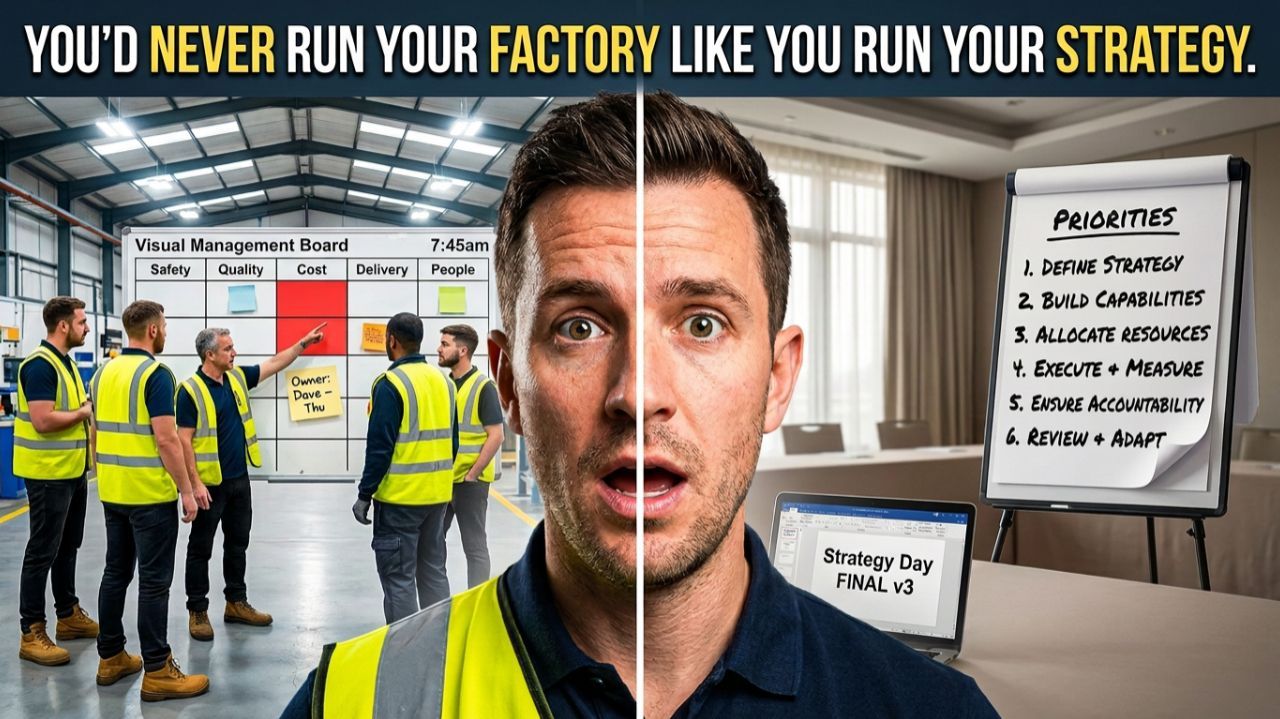
The irony is that many owners think “staying small” is what keeps a business agile and lean. In reality, small business thinking often becomes expensive once a manufacturer has employees, complexity, and consistent turnover. Acting like a PLC before you are one is not about bureaucracy for its own sake; it is about putting the right structure in place so growth does not destroy control.
For established manufacturers, growth brings more than more sales. It brings more customers, more stock, more suppliers, more risk, more compliance, and more decisions that cannot be left to memory or instinct. If the business still runs on founder oversight, informal conversations, and a few heroic individuals fixing problems as they appear, the cost of growth rises faster than the benefit.
This is why some manufacturers look busy but never feel more profitable. They are winning work, but the business is leaking value through poor visibility, reactive management, and constant short-term problem solving. The businesses that break through are usually the ones that build PLC-like discipline long before they ever need the legal structure of a PLC.
The phrase “act like a PLC” should not be confused with becoming corporate in a stiff or over-engineered way. The real point is to borrow the habits that make larger organisations resilient: structured reporting, clear accountability, consistent risk review, and decisions based on evidence rather than instinct. For a manufacturing business, those habits are often the difference between steady scaling and chronic frustration.
Small business thinking is not about company size. A manufacturer with 12 employees can behave more professionally than one with 120. The issue is the operating model: decisions made informally, no clear board rhythm, inconsistent KPI review, and a dependence on the same people to solve every issue.
It also shows up in reporting. Many firms still rely on spreadsheets, late month-end numbers, and management conversations that are more anecdotal than analytical. That approach may feel fast in the short term, but it weakens control because leaders are always looking backwards, often after the damage is already done.
A more subtle version of small business thinking is “we know our numbers well enough.” In practice, that often means the business knows revenue and maybe gross margin, but not the operational drivers underneath them. Once the business reaches a certain level of complexity, “well enough” becomes a costly assumption.
Another common trait is overdependence on the owner or managing director. When every significant decision needs their input, the business may appear efficient because it is fast to answer questions. In reality, it is fragile because it cannot run well without the same individual being involved in too many moving parts. That is not a growth model. It is a bottleneck.
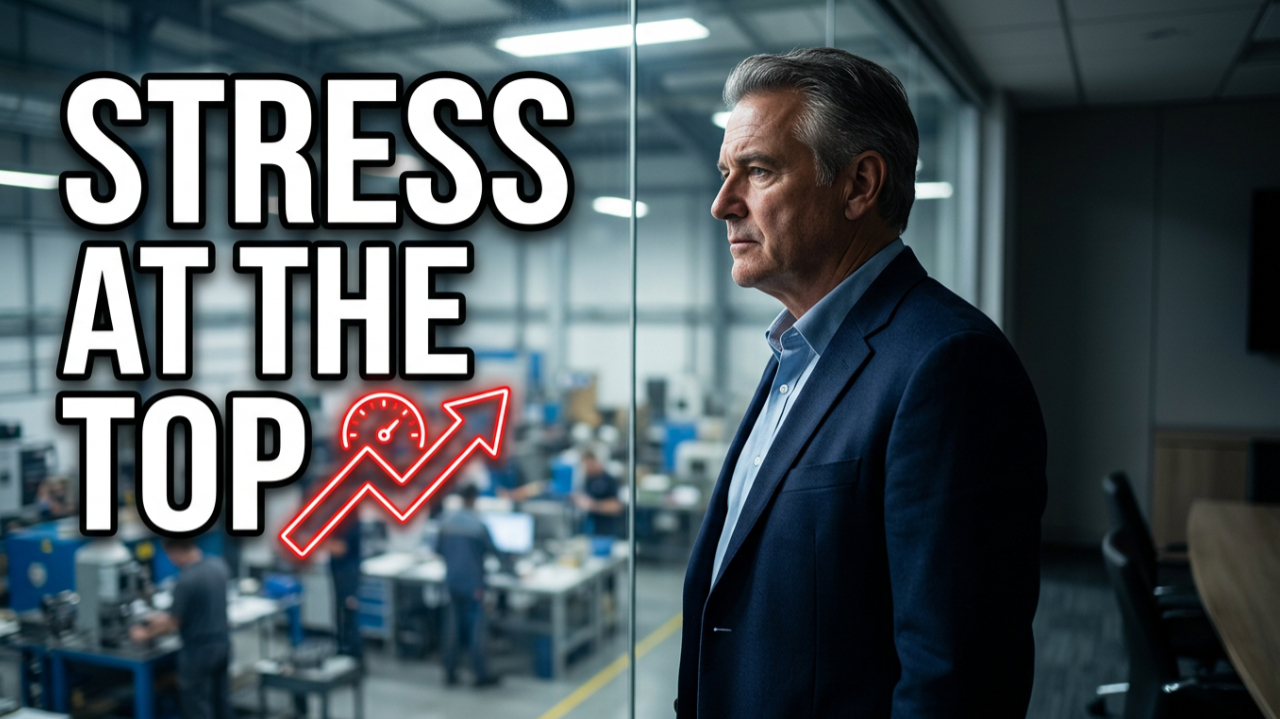
The biggest hidden cost is firefighting. Constantly reacting to production issues, customer complaints, late orders, and urgent cash concerns drains leadership capacity and leaves no time for planning. Firefighting also creates a false sense of productivity because everyone is busy, while the root causes remain unresolved.
This pattern is especially damaging in manufacturing, where small operational problems quickly become commercial ones. A missed machine service becomes downtime. A missed delivery becomes an expediting cost or a lost customer. A poorly planned production run becomes overtime, stress, and lower productivity. The original problem may look minor, but the accumulated effect on margin can be severe.
Cash flow is another major leakage point. Manufacturing businesses often pay out for labour, materials, and overheads long before they receive cash from customers, which makes forecasting and working capital discipline essential. If cash is only reviewed when things feel tight, the business is operating blind to one of its most important control variables.
Inventory, procurement, and production planning also hide waste. Excess stock ties up capital, poor scheduling creates bottlenecks, and weak visibility causes rush purchasing and avoidable expediting costs. Even small percentage errors in these areas can do real damage when multiplied across a growing manufacturing business.
There is also a people cost. When leaders are always putting out fires, they stop leading properly. Strategic thinking gets pushed aside, development plans are delayed, and the business becomes more reactive month by month. Over time, that reactive culture can affect morale, retention, and the quality of decision-making across the company.
And then there is the cost that rarely gets measured at all: missed opportunity. If management is consumed by day-to-day problems, they are not spending enough time on pricing, customer segmentation, capability investment, new markets, or margin improvement. That is often where the real value is lost. Not in the dramatic mistakes, but in the slow accumulation of things not done.
PLC-style discipline is really about governance, rhythm, and clarity. Public companies are forced to be more structured because they need visibility over risk, performance, and accountability, and those same habits benefit established private manufacturers too. The point is not to copy the formality of a listed company; it is to adopt the parts that improve decision-making.
A strong PLC-style business has regular reporting, defined accountability, and a clear separation between data, discussion, and decision. It knows what it measures, why it measures it, and who owns each number. That sounds simple, but it changes how quickly problems are spotted and how consistently they are addressed.
It also creates a better relationship with risk. Rather than waiting for issues to surface in sales, cash, or customer complaints, the leadership team has a regular process for identifying what could go wrong, how likely it is, what the impact might be, and what action is being taken. That mindset is common in larger businesses because it protects value. In a manufacturing SME, it can be transformative because it reduces surprises.
Another important shift is that PLC-style discipline removes emotion from too many decisions. In a smaller business, the loudest issue often wins. In a more mature business, decisions should be made through data, ownership, and consequence. That does not mean leadership becomes cold or mechanical. It means the business becomes more objective, which is vital when margins are under pressure.
One of the most useful habits a growing manufacturer can adopt is the board pack mindset. Board packs are designed to give decision-makers a clear, structured view of performance, risks, actions, and priorities. That is exactly what growing manufacturing businesses need, even if they never become formal board-reporting organisations.
At minimum, a useful monthly pack should include profit and loss, cash flow, balance sheet, KPI trends, actions from the previous meeting, major risks, and a short management commentary. The value is not the pack itself, but the discipline behind it: everyone sees the same version of the truth, and decisions become more objective.
For manufacturing directors, this can be transformative. When operational, financial, and commercial numbers are reviewed together, issues stop being isolated symptoms and start being connected causes. If on-time delivery has slipped, for example, the pack should help show whether the root cause is capacity, planning, staff availability, supplier performance, or quality. That is the kind of clarity that turns management into control.
A board pack also creates continuity. Without it, each meeting can become a fresh discussion of the same old issues, with little evidence of progress. With it, actions are tracked, trends are visible, and leadership can hold itself to account. That is one of the simplest ways to create discipline without adding bureaucracy.
The Fractional NED Session: Board-level Counsel Without the Internal Politics
The 1-on-1 Strategic Sounding Board for Technical Founders and MDs. Click here!
ERP is often misunderstood as a software project, when in reality it is a management discipline enabler. The real benefit of ERP is not just automation; it is that it creates visibility across orders, stock, production, finance, and planning. That makes it much easier to see where margin is being lost and where bottlenecks are forming.
This matters because manufacturers cannot manage what they cannot see. If sales, operations, and finance are each working from different data sets, the business will keep arguing about numbers instead of improving performance. A single source of truth is one of the clearest signs that a business has moved beyond small business thinking.
Good reporting also supports better forecasting. Cash flow forecasts, working capital planning, and production scheduling all become more reliable when the business has proper data and review cadence. For a growing manufacturer, that is not a nice-to-have; it is a competitive advantage.
ERP and reporting also reduce dependency on individuals. In many SMEs, crucial information lives in one person’s head or in a patchwork of spreadsheets that only they understand. That is risky, because it makes the business harder to scale and harder to hand over. A more mature reporting structure creates resilience by making knowledge shared rather than personal.
It is also worth noting that ERP is not automatically the answer. The software only helps if the business has the discipline to use it properly. Many SMEs buy systems hoping for control, but do not change their habits enough to gain the full benefit. The real change comes from deciding what needs to be measured, how often it will be reviewed, and who is responsible for acting on the information.
Small business thinking also creates a people problem. When the business depends on a handful of individuals to spot issues, solve problems, and keep things moving, the organisation becomes fragile. That fragility usually shows up as bottlenecks, stress, inconsistent standards, and poor succession planning.
A more structured business spreads responsibility more intelligently. That does not mean removing ownership from the founders or directors. It means making accountability visible so problems are owned, reviewed, and resolved systematically rather than emotionally. In practice, that improves both performance and morale.
It also helps retain talent. Good managers tend to prefer environments where expectations are clear, decisions are made consistently, and the business is not constantly drifting from one emergency to the next. If your best people spend too much time compensating for weak systems, they will eventually become frustrated.
From a leadership perspective, this matters because manufacturing growth often depends on a small number of critical people. If one or two individuals carry too much knowledge, too much operational responsibility, or too much customer contact, then growth becomes dangerous. The more the business can document, delegate, and standardise, the more robust it becomes.
A PLC-style mindset also improves development. When there is a proper structure, managers can grow into their roles rather than simply react inside them. That gives the business a much better chance of creating future leaders rather than just collecting task-fixers.
The shift does not need to be dramatic. In fact, the most effective change is usually incremental and disciplined rather than grand and disruptive. Start by identifying the five to ten numbers that truly drive performance in your business, such as on-time delivery, scrap, labour efficiency, cash conversion, gross margin, and debtor days.
Next, create a fixed monthly rhythm. The same people, the same pack, the same structure, and the same focus on actions and follow-up. Consistency is what turns management from a reactive conversation into a control system.
Then clarify ownership. Every major KPI, improvement area, or recurring issue should have one accountable owner. That does not mean they solve everything alone. It means they are responsible for driving progress, reporting it, and escalating when needed. Without ownership, problems tend to become everyone’s concern and no one’s responsibility.
Directors should also review the quality of their data. If the numbers are unreliable, late, or inconsistent, then decision-making will always be weaker than it should be. Better reporting is not just an admin task. It is a strategic asset.
Another useful step is to spend more time on exceptions and less time on routine reassurance. In a well-run business, management should focus on the things that are off track, not endlessly rehash the things that are working. That keeps meetings sharper and forces the organisation to be honest about what is really happening.
A practical 90-day plan might look like this:
This approach works because it creates control without adding unnecessary bureaucracy. Over time, those small changes compound into better decisions, faster responses, and more reliable growth.
It may also be useful to review one recurring pain point each month. For example, if stock accuracy is poor, focus on that. If margin is inconsistent, dig into pricing, scrap, and quoting discipline. If order fulfilment is weak, examine planning and capacity. The key is not to try to fix everything at once, but to make steady progress on the areas with the greatest impact.
That kind of discipline is what separates mature businesses from busy ones. The best-run manufacturers are not necessarily the most exciting or the most fast-moving. They are the ones that know where value is created, where it is lost, and how to make improvement part of the business rhythm.
The secret to growth is rarely working harder in the same old way. For established manufacturers, the real breakthrough often comes from replacing “small business thinking” with the discipline, visibility, and accountability of a PLC-style business. That shift reduces hidden costs, protects margin, and gives directors the control they need to scale with confidence.
Growth does not just require more sales. It requires more structure, more clarity, and more leadership discipline. The manufacturers that recognise this early tend to build stronger businesses, make better decisions, and create more value over time. Acting like a PLC before you are one is not about changing who you are. It is about making sure the business is fit for the size it has already become.
Pay It Forward! Sharing Is Caring!