
Does 'Clarity of Purpose' Make a Difference?
Adam Payne • 9 December 2020
Do you need to reach deeper into yourself to find out what makes you come alive
We were asked in a roundtable event if ‘Clarity of Purpose’ makes a difference?
In my opinion absolutely.
The clarity of purpose is a powerful thing. It helps us make better decisions, and it can drive better leadership.
A clear sense of purpose helps us to make better decisions because we're able to assess whether or not a decision will help us reach our goal. It also helps us to know what kind of people we want to be, so that we can empower those around us to be the same way. This is especially important when it comes to leadership: leaders can inspire and motivate their teams around a specific goal, and they can do this best when they have a strong sense of self-knowledge.
Leaders with clear purpose understand how their actions affect others, so they are better able to serve as an example for others in the organisation. They also know what drives them personally beyond just making money—and that translates into greater effectiveness as leaders because it allows them to set more ambitious goals for themselves and for their teams.
Simon Sinek’s Golden Circles ‘Start with Why’ is a fantastic exercise, additionally getting to grips with asking yourself
- Am I happy? Are you passionate about what you're doing? ...
- What do I want? What do you want to achieve so much that you’ll be motivated to learn, work, and sacrifice more than anyone to reach that goal? ...
- What do I know? ...
- Can I solve a problem?
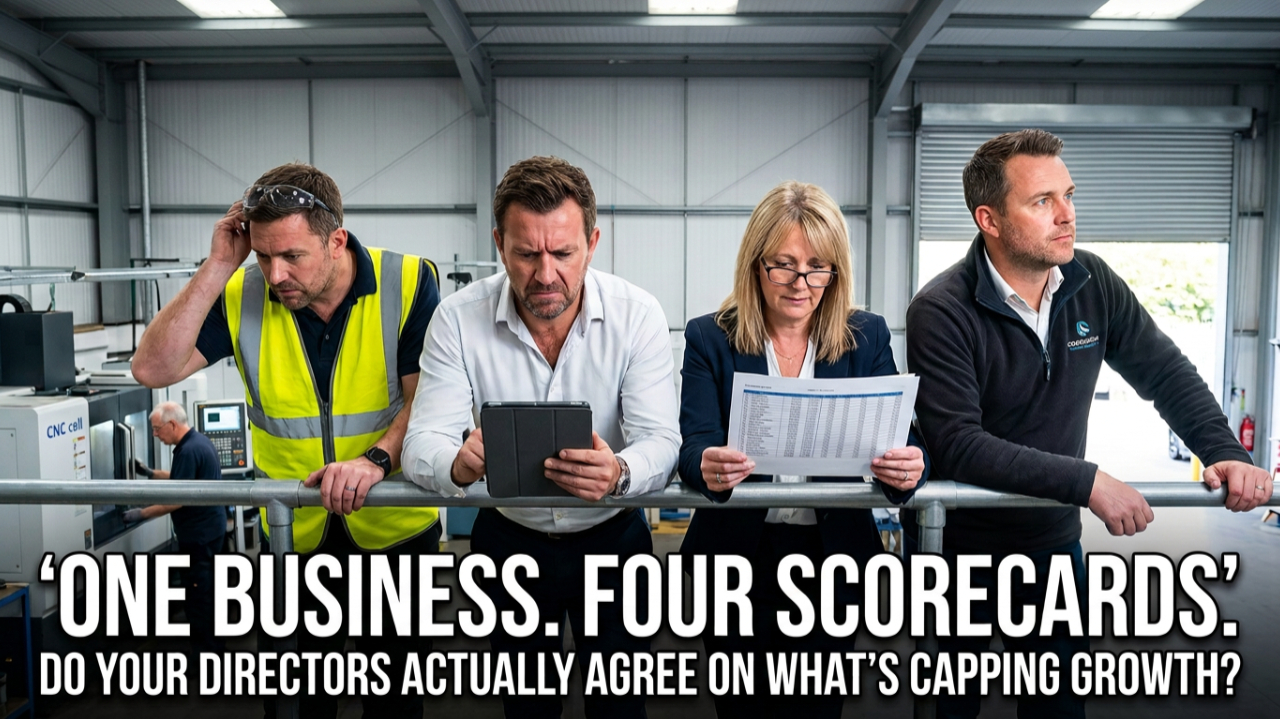
Why directors of UK mid sized manufacturers often disagree about what's capping growth without realising it, what that hidden misalignment costs in split budgets and stalled initiatives, and how the Four Answers Test reveals it in one 45 minute meeting using a scored alignment total and a confidence gap.
A quiet diagnostic exercise for MDs of UK medium sized manufacturers: list every decision you made last week, mark those that reached you through habit, history or a missing written rule, then note how long each one waited, to see how much critical knowledge runs through too few heads.
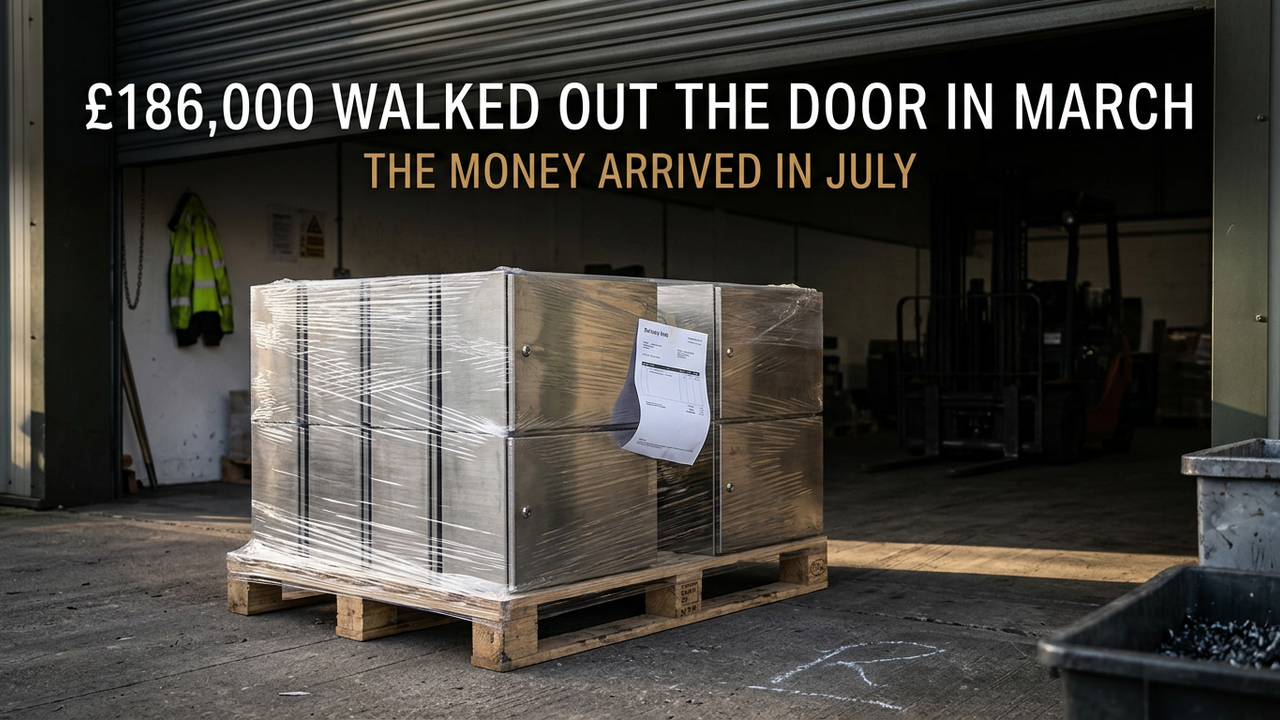
Follow one £186,000 UK manufacturing contract from quote to bank and see exactly where the margin goes: a discount agreed in the last five minutes, stale material prices, panels scrapped after a drawing revision, ten days of invoice drift, a bounced part number and five months funding someone else's business.

UK manufacturing growth numbers get committed in the boardroom, the bank, to a group MD or across the kitchen table, while the capacity, decision rights and reporting lines needed to deliver them are quietly assumed rather than built. A practical look at where that gap comes from and what closing it actually requires.
UK manufacturing firms stall at roughly £3m, £10m and £25m for structural reasons, not effort. This guide explains each growth ceiling, the warning signs (decisions queueing on the owner, revenue rising while margin flatlines, knowledge trapped in 3 or 4 heads), and the specific changes that break through each one.

How UK engineering, defence and confidential contract manufacturers build authority when NDAs, IP restrictions and export controls block the obvious approach.

A practical risk register for UK micro and medium manufacturers: ten marketing roadblocks, including capacity limits, late payment cash flow squeezes, key person dependency, platform changes and staff turnover, each paired with an early warning sign and a specific contingency to plan around before it derails growth.

For UK manufacturers, marketing stops and starts because of capacity, ownership and planning, not willpower. Here is a routine that survives busy months.

How UK manufacturers can turn "that's not my job" into lasting accountability using the PDCA cycle (Plan, Do, Check, Act) and a daily governance rhythm, explained with real shop floor examples.

KPIs are health metrics you track continuously, such as OEE, OTIF and scrap rate. OKRs are quarterly change goals with a start point and a finish point. UK manufacturers turning over £5m to £50m usually need trustworthy KPIs before OKRs will work at all.