BUILD YOUR MAP TO REVENUE ON A SINGLE PAGE.
If it doesn’t move the needle, it doesn’t earn a space. Get the disciplined framework designed for instant actionable clarity. Click here!

0330 311 2820
If you run a small or medium manufacturing business in the UK, you probably didn't sit down one quiet Tuesday and write a marketing plan from scratch. More likely, it grew the way most things grow on a factory floor: bit by bit, reactively, whenever there was time between quoting jobs, chasing a supplier, or sorting out a machine that had decided to have an opinion of its own that morning.
And that's fine. Honestly, it's normal. Most manufacturers you'll ever meet built the business on the product, not on the marketing. But here's the thing nobody tells you early enough: a marketing plan doesn't fail because the strategy was wrong. It fails because something predictable got in the way and nobody had a plan for that something. A key person left. A big customer paid sixty days late. The order book went quiet in August and everyone panicked in September.
This post is a practical risk register, not a strategy deck. Ten roadblocks that quietly derail growth plans for micro and medium manufacturers across the UK, grouped into four areas: capacity, money and timing, people, and the platforms and systems you depend on. For each one, you'll get an early warning sign to watch for and a specific contingency you can actually put in place, not just a vague nod towards "being more resilient."
I'll be honest, some of this comes from watching manufacturers do this well and plenty doing it badly. None of it is complicated. Most of it just needs deciding in advance, while things are calm, rather than in the middle of a crisis when you've got no time and no headspace to think clearly.
You'll probably recognise most of these before you've even finished reading. That's sort of the point. A risk register isn't clever because it predicts something nobody saw coming. It's useful because it forces you to admit, on a quiet afternoon, that yes, the same thing that happened last year is very likely to happen again this year, and this time you'll actually be ready for it. Most manufacturing businesses I've come across don't lack the intelligence to see these problems coming. They just never quite get round to writing the answer down before they need it.
Let's get into it.
Nearly every small manufacturer I've spoken with has, at some point, had one person doing the website, the exhibition stand, the case studies, the email newsletter and answering enquiries, often while also doing a completely different day job. That works for a while. Then it doesn't.
Early warning sign: deadlines start slipping quietly rather than obviously. The trade show is in six weeks, and the new brochure still isn't finished. Nobody's said "we're behind," but everyone can feel it.
Your contingency: decide, in writing, what marketing work genuinely needs someone inside the business (product knowledge, customer relationships, technical accuracy) and what can be handed to a freelancer or agency (design, copywriting, video editing, social scheduling). Then block that external capacity before the busy period starts, not once you're already underwater. A lot of manufacturers wait until the trade show is three weeks out to ask for help. By then, good freelancers are already booked.
I've seen this play out the same way more times than I can count. A firm decides in March that they'll "sort the marketing properly this year," gets busy with actual production in April, and by August they're stitching together a stand graphic the night before the exhibition. Nobody planned to leave it that late. It just happens, quietly, when there's no capacity plan sitting behind the good intentions.
Manufacturing marketing has a specific problem that a lot of generic marketing advice ignores completely: your sales cycle might be nine months. Someone downloads a spec sheet in January and signs a purchase order in October. Trying to draw a straight line from one campaign to one sale is, in most cases, a bit of a fantasy.
Early warning sign: you're being asked (or asking yourself) which campaign "worked," and you genuinely can't answer, so marketing starts to feel unaccountable and gets deprioritised.
Your contingency: stop trying to prove a straight line and track leading indicators instead. RFQ enquiries, spec sheet downloads, portal registrations, returning visitors to technical pages, sample requests. These won't tell you exactly which post won you the contract, but they'll tell you whether interest is building or drying up months before the sales figures confirm it either way.
This is the one that catches manufacturers out more than any clever competitor ever will. UK small businesses are, on average, sitting on around £22,000 in unpaid invoices at any given time, and over half of SME invoices were paid late in 2024. When a big customer pays sixty or ninety days late instead of the agreed thirty, marketing is usually the first line item to get quietly paused. It feels discretionary in a way that wages and materials don't.
Early warning sign: you notice marketing spend has become the thing that flexes up and down with cash in the bank, rather than something planned months ahead.
Your contingency: treat a minimum monthly marketing spend as a fixed cost, the same category as rent or insurance, not a nice to have you switch on when things feel comfortable. If cash is genuinely tight, reduce the scope of activity rather than switching it off completely. A quiet, consistent presence survives a rough quarter. A start stop pattern makes you look like you've gone out of business, which is exactly the impression you don't want a nervous customer forming.
Late payment costs UK small businesses an estimated £1.6 billion a year just in the effort of chasing it, and it's genuinely thought to contribute to around 50,000 business closures annually. That's not marketing spend disappearing into thin air, it's real working capital tied up in someone else's invoice, and it's worth remembering the next time a marketing budget gets paused "just for a month or two."
Manufacturing demand rarely moves in a straight line. There's often a predictable trough after a major trade show, a summer slowdown when procurement teams are on leave, and a January rush when annual budgets reset. Order books have swung noticeably in recent years, with several sharp dips reported through 2025 and into early 2026, and that unpredictability makes it tempting to only market when things are busy, which is precisely backwards.
Early warning sign: you can set your watch by it. Enquiries always dip in the same month, and every year it seems to catch the business by surprise anyway.
Your contingency: plan your quietest quarter's marketing activity a full quarter in advance, while things are still calm. Use the slow period to build the content, case studies and technical resources that you never have time for when the factory's flat out. Then when demand does pick back up, you're not starting from nothing, you're nurturing a pipeline you've already been feeding.
It isn't just customers being slow to pay. Nearly nine in ten UK manufacturers expect employment costs to keep rising, and energy costs remain a serious pressure on margins right across the sector. When input costs climb, marketing budgets tend to get squeezed quietly, not through a formal decision, just through a hundred small deferrals that add up.
Early warning sign: the marketing budget hasn't been cut on paper, but somehow less of it is actually being spent, quarter after quarter.
Your contingency: review your marketing budget as a proportion of revenue, not a fixed cash number, and revisit it properly twice a year rather than letting it drift. If costs elsewhere are rising, that's actually a reason to protect your pipeline more carefully, not less. You need the enquiries even more when margins are tight.
BUILD YOUR MAP TO REVENUE ON A SINGLE PAGE.
If it doesn’t move the needle, it doesn’t earn a space. Get the disciplined framework designed for instant actionable clarity. Click here!
This might be the single biggest hidden risk on this whole list. In a lot of small manufacturers, one person, often the founder or the sales director, holds most of the customer relationships, the sector knowledge and the informal marketing voice of the business. Everyone knows it. Nobody's written it down anywhere.
Early warning sign: ask yourself honestly, if that person took two months off tomorrow, could someone else write a genuinely convincing case study, or credibly answer a technical enquiry from a prospect, without them?
Your contingency: start systemising what's in that person's head before you need to. Record their sector knowledge as content, technical explainers, FAQs, short videos answering common customer questions. Get customer context into a proper CRM rather than a notebook or their memory. It isn't about replacing them. It's about making sure the business's knowledge doesn't walk out the door if they're ill, or leave, or just take a well-earned holiday.
To be honest, most owners know this is a risk and still put off doing anything about it, mainly because the person in question is usually far too busy actually running things to sit down and write it all out. Which is fair enough. But that's exactly why it needs to be someone else's job to capture it, an hour of conversation recorded and turned into content, rather than waiting for that person to find a free afternoon that never quite arrives.
UK manufacturing has a genuine recruitment problem, and it's getting worse, not better. Over seventy percent of manufacturers report difficulty filling skilled roles, and a fifth of the current workforce is over fifty-five, heading towards retirement over the next decade. Marketing and technical sales roles that need real sector understanding are just as hard to fill as shop floor roles, sometimes harder, because you need someone who understands both marketing and your product.
Early warning sign: every time someone in a customer facing or marketing role leaves, you're effectively starting again, explaining the product range, the tone of voice, and who the key customers are, all over again from scratch.
Your contingency: build a small set of durable assets that survive individual people leaving. A written brand and tone guide, a properly organised technical content library, documented customer personas. None of this needs to be fancy. It just needs to exist somewhere other than in someone's head or their old laptop. It also makes onboarding a replacement considerably faster, which matters when a skilled hire might take two months to find.
If a meaningful chunk of your enquiries come through LinkedIn, or Google Ads, or a single directory site, you're building on land you don't own. LinkedIn's algorithm has shifted more than once recently, changing how much reach organic company posts actually get, and privacy and cookie consent rules keep tightening what platforms like Google Analytics can track without explicit permission. None of this is under your control, and none of it comes with much warning.
Early warning sign: enquiries or reach drop suddenly with no obvious internal cause, and you realise you can't explain why because you never really understood how dependent you were on that one channel.
Your contingency: diversify deliberately and own what you can. Your email list and your website are yours. A platform's algorithm isn't. Make sure every campaign, whatever the channel, is also building your own list and driving people to content you control, so a sudden algorithm change dents your reach rather than sinking your pipeline entirely.
It's a bit like putting all your stock with one distributor and hoping they never change their terms. Might work fine for years. Then one day it doesn't, and you've got no fallback because you never built one. Treat your website and your email list as the thing you actually own, and treat every other platform as a useful visitor, not the foundation.
This one's less glamorous than an algorithm change, but it probably costs more leads over a year than any of the roadblocks above. An enquiry comes in, it sits in someone's inbox and follow up depends entirely on somebody remembering to chase it. They don't, or they chase it three weeks too late, and a genuinely warm lead has gone cold and probably gone to a competitor.
Early warning sign: you honestly don't know, right now, how many enquiries came in last month or what happened to each one.
Your contingency: you don't need an expensive CRM system to fix this. Even a shared spreadsheet with clear ownership and a simple follow up cadence, day one, day three, day seven, beats relying on memory. The point isn't sophistication, it's that nothing falls through the cracks because nobody was watching.
It's tempting to be everywhere. LinkedIn, Instagram, email, paid ads, a stand at every relevant trade show. The trouble is that trying to do all of it usually means doing none of it particularly well, and your specific buyer, a procurement manager or technical specifier, probably only pays proper attention to one or two of those channels anyway.
Early warning sign: you're active on four or five platforms and can't honestly say which one is producing results, because you've never had the resource to do any of them properly.
Your contingency: pick the two channels that genuinely reach your buyer and commit to them properly. For most manufacturers that's a strong, well-maintained website plus one other channel, often LinkedIn or trade press, done consistently. A focused presence on two channels will outperform a thin, inconsistent presence on six almost every time.
None of these ten roadblocks are exotic. That's rather the point. Capacity, cash flow, seasonality, rising costs, key person dependency, staff turnover, platform risk, weak follow up, and spreading yourself too thin, these are ordinary, predictable pressures that hit almost every small and medium manufacturer in the UK sooner or later. The businesses that keep growing through them aren't the ones with the cleverest campaigns. They're the ones who saw the roadblock coming and had already decided what they'd do about it.
So maybe don't try to fix all ten this month. That's not realistic, and honestly it would probably make things worse rather than better. Pick the one that's closest to actually happening to you right now, the one where you read the early warning sign above and felt a small flicker of recognition and put a contingency in place for that one first. Then move to the next.
If you want a quick way to start, grab a sheet of paper (or a spreadsheet, if that's more your thing) and list the ten roadblocks down the left. Next to each one, be honest with yourself about how close you are to the warning sign right now, today, not in some hypothetical future. You'll probably find two or three feel uncomfortably close. Start there. Everything else can wait until those are properly covered.
A marketing plan that only works when everything goes smoothly isn't really a plan. It's a hope. What you want is something closer to a risk register: a short, honest list of what's likely to go wrong, and what you'll do the moment it starts to. That's not pessimism, it's just what running a manufacturing business in the UK right now actually requires. Build it once, revisit it twice a year, and it'll quietly save you more growth than any single campaign ever could.
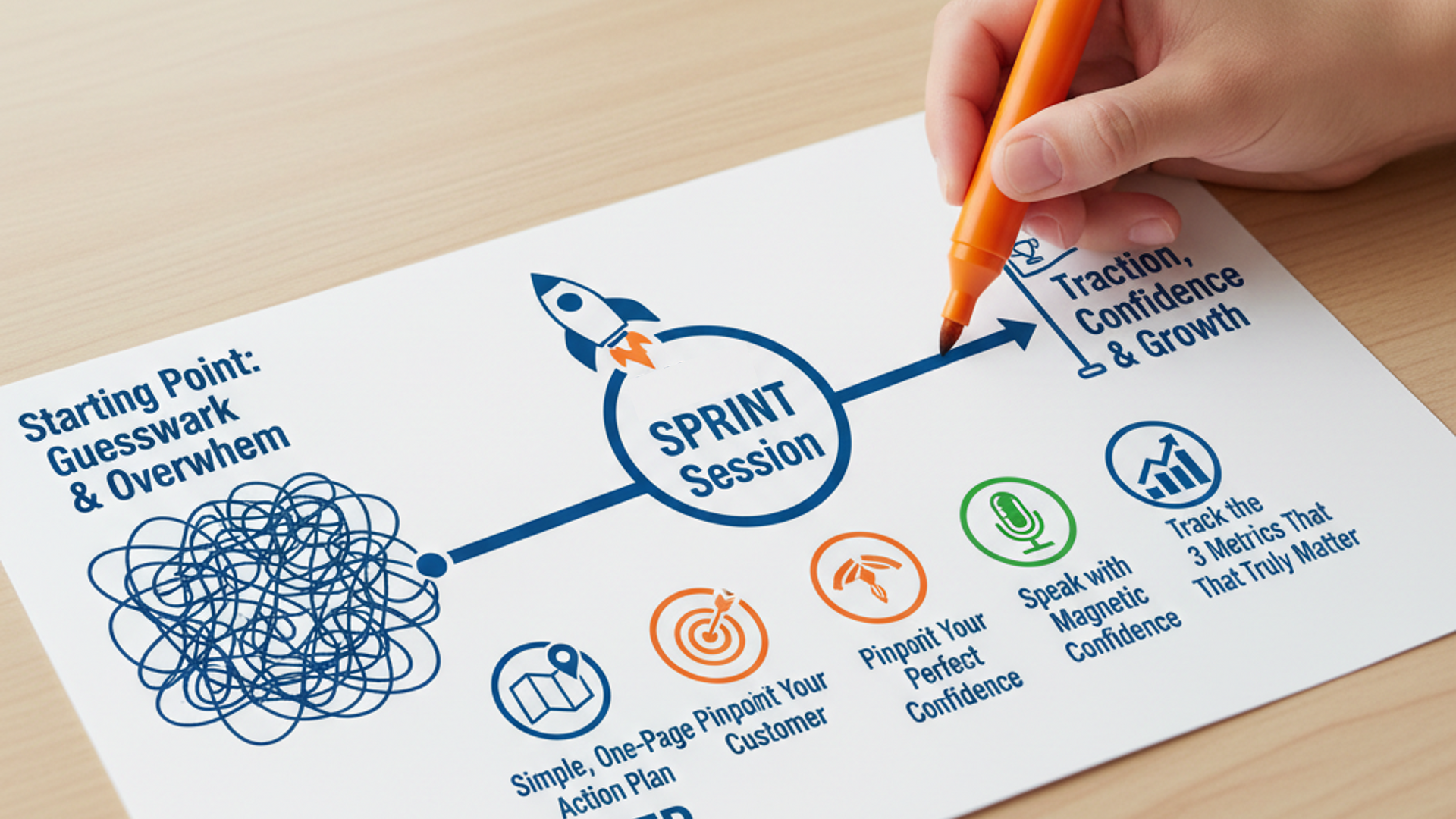
If you got this far and one or two of these roadblocks felt a bit too close to home, that's honestly the whole point of the exercise. Knowing which one is going to hit you next is useful. Having someone sit down with you and actually build the contingency, properly, rather than adding it to a list you'll get to eventually, is even more useful. That's what our Pathfinder Marketing Sprint is for. It's a short, focused working session where we go through exactly this kind of risk register for your business specifically, work out which of these roadblocks are the real threat to your growth plan this year, and leave you with a genuine plan for each one, not just a longer to do list. You can find out more and book a place on the
Pathfinder Marketing Sprint.
Pay It Forward! Sharing Is Caring!